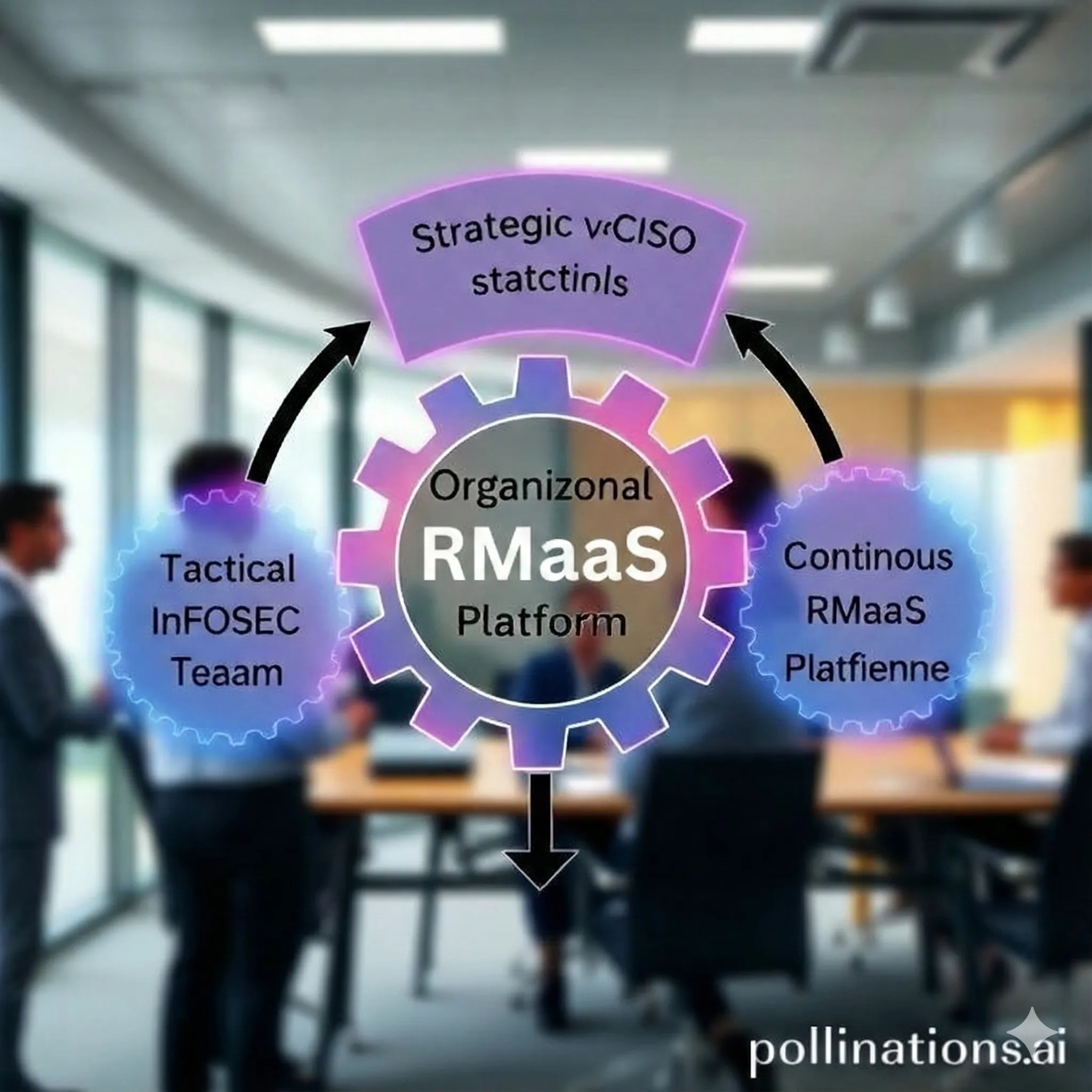
When a company hires a vCISO (Virtual Chief Information Security Officer) or builds out its internal InfoSec team, the expectation is usually simple: "They keep us secure." While true, that phrase often hides the complex, continuous work required to translate global security standards into day-to-day business operations and verifiable proof.
The core function of a high-performing InfoSec team is managing compliance requirements immediately, by defining operational scope and providing a "Golden Triad" of documented proof for every security control in the business.
The Two Core Functions of the InfoSec Team
The InfoSec team’s responsibilities can be divided into two critical, continuous activities:
INFOSEC-1. Readiness: Building the "Golden Triad" Repository
This function is the strategic foundation that ensures all controls are defined, implemented, and documented, making the company permanently auditable.
Focus Area
Deliverables
Foundation Building
Establishing and socializing dozens of policies (e.g., Data Retention, Incident Response) that dictate security behavior across the organization.
Scope Definition
The vCISO helps constrain the compliance area by mapping exactly which systems, networks, and people touch sensitive data. This makes the effort feasible and cost-effective.
Evidence Repository
Building up the repository of evidence to hundreds of items, including configuration files, training logs, security reports, and system architecture diagrams.
This function ensures the security program remains effective over time and that the organization successfully navigates the complex regulatory calendar.
Focus Area
Deliverables
Framework Adherence
Maintaining compliance to defined frameworks (SOC2, ISO27001, HIPAA, etc.) month over month.
SLAs and Tracking
Defining SLAs (Service Level Agreements) for security tasks (e.g., time to patch critical vulnerabilities) and tracking current compliance against those performance metrics.
Strategic Oversight
Defining new objectives, new frameworks, and methodologies to enhance the security posture, driving continuous improvement and handling audit events.
The Audit: A Validation of Maturity and Influence
The audit is often misunderstood as a single, isolated event. In reality, very little of the audit has to do with a single point in time. The audit is a rigorous validation by an objective observer that a process is in place, is being consistently managed, and critically, has influence on company operations, budget, strategy, and executive decision-making.
For almost all major audits (including PCI DSS, ISO 27001, and SOC 2 Type 2), the focus is overwhelmingly on the maturity and experience tied to the ongoing administration of the processes around risk management. The auditor is assessing:
Process Management: Is the control being continuously managed and maintained month-over-month?
Executive Influence: Does the InfoSec process have the authority to influence budget decisions and strategic direction?
Operational History: Does the documented evidence reflect a deep, embedded commitment to security, or just a last-minute push for a certification date?
Only in unique cases (like a SOC 2 Type 1 report) is the focus limited to the "proposed" strategy. For almost everything else, the audit is a review of demonstrated operational history over the course of many months.
The Golden Triad: Proving Compliance
To satisfy the auditor and complete this validation, the InfoSec team must deliver the following "Golden Triad" of documentation for every control:
Triad Component
What It Is
Example for "Access Control"
1. Applicable Policy
The written rule or promise the company makes.
“All administrative access must require multi-factor authentication (MFA).”
2. Implementation
How the policy is set up in a technical system.
A screenshot of the VPN configuration showing MFA is enabled, and a list of authorized admins.
3. Operational Evidence
Logs or reports proving the policy works continuously.
An audit log showing every login event for the past 90 days, with an associated MFA token timestamp.
The Airius Advantage: Security as a Sales Driver
A vCISO's value is in orchestrating this process efficiently, allowing internal IT teams to focus on delivery instead of manual documentation. The Airius team routinely manages lots of complex audits annually, a few to a dozen per month. They step in and guide clients to regulatory success and risk management maturity, benefiting from that intense experience.
They collectively have a career's worth of experience each month, and use that to shape the influence given to each client. With risk maturity becoming a critical sales influencer, the Airius, LLC team is evolving to be sage sales drivers through effective and verifiable INFOSEC management for their client.
For more information, contact Airius, LLC at info@airius.com.
Risk Maturity
A Stool Supported by Three Legs
In the world of corporate governance and security, achieving true stability isn't about checking boxes—it's about reaching a state of Risk Maturity.
We like to think of a mature compliance program as a stool , where the seat is the organization's Executive Governance (Strategic Oversight) and the three legs are the essential functional components. If any leg is weak, the entire structure—and the business—is unstable.
Here is a look at the base and the three equally critical legs that support a mature compliance program:
The Seat: Executive Governance & Risk Maturity
Risk Maturity is a measure of how well an organization integrates strategic security oversight into its executive governance division. It moves security beyond a purely technical IT function and places it firmly within the boardroom.
A key sign of a mature program is the clear division of roles at the top, typically ensuring the CISO (Chief Information Security Officer) and the CIO (Chief Information Officer) both report directly to the Board and CEO.
CISO's Role (Strategy): Defines the organization's future state security goals, establishes the acceptable risk appetite, and leads long-term security architecture.
CIO's Role (Operations): Manages the execution of current projects, oversees the IT infrastructure, and controls the current budget and effort required to maintain systems.
This separation keeps strategic planning distinct from daily operations, allowing senior management to monitor current costs and efforts (operational) while simultaneously investing in future state defenses (strategic).
The Three Equally Important Legs
A mature compliance program is built upon the interaction between these three pillars of function:
Leg 1: The Internal Engine (The InfoSec Team)
This is the team responsible for translating the CISO’s strategic vision into daily action. They are the architects who design the controls and the executors who implement them (e.g., configuring firewalls, managing access).
Function
Outcome
Control Implementation
Enacting all security policies across the live environment.
Evidence Collection
Proactively gathering the necessary logs, reports, and documentation (the "objective evidence") that proves controls are running 24/7.
Risk Remediation
Identifying and fixing vulnerabilities and threats before they can be exploited.
Leg 2: The Source of Truth (The GRC Platform)
This specialized software platform is the central nervous system of the compliance stool. It eliminates reliance on scattered spreadsheets and manual processes, providing a single, unified system of record.
Function
Outcome
Framework Mapping
Aligning external regulatory requirements (like PCI DSS) with internal technical and administrative controls.
Automation
Automatically integrating with cloud environments to pull evidence, track changes, and monitor control status in real-time.
Audit Readiness
Ensures the organization is always prepared for an assessment by showing a live, transparent view of all controls.
Leg 3: The Independent Validator (The External Auditor)
The external auditor, such as a Qualified Security Assessor (QSA), provides the essential objective viewpoint and the formal authorization required by the industry.
Function
Outcome
Objectivity
Provides an unbiased review of the program's effectiveness, validating what the internal team claims versus what the GRC platform proves.
Verification
Utilizes the GRC platform to efficiently trace collected evidence back to regulatory requirements, streamlining the audit process dramatically.
Certification
Issues the formal Report on Compliance (RoC)—the highest stamp of approval—required for organizations like Upwire to maintain its PCI Level 1 Service Provider status.
The Result: A Stable Foundation
When all three legs are strong and aligned, the organization achieves genuine risk maturity. As demonstrated by Upwire’s recent full PCI Level 1 Service Provider RoC, the integration of a strong Internal Engine, supported by a centralized GRC Platform, and verified by an objective External Auditor, creates a stable, defensible, and trustworthy security posture.
Contact Information:
Airius, LLC can be contacted at info@airius.com.
SOC2, ISO27001: DIY no longer allowed for Compliance
Why Modern Compliance, Especially ISO 27001, Demands Professional Expertise and Executive Accountability
In an increasingly digitized world, the foundational pillars of business—trust, data integrity, and operational resilience—are under constant siege. Cyber threats are more sophisticated than ever, and the regulatory landscape has evolved from a patchwork of basic rules into a dense, interconnected web of complex, legally binding frameworks. For many organizations, the question of "how to achieve compliance" has shifted dramatically. The era of a small internal team "DIYing" their way through security standards like ISO 27001 is rapidly fading, replaced by a mandate for strategic, expert-driven approaches that start and end in the executive suite.
This isn't merely about avoiding fines; it's about unlocking revenue and building organizational resilience. The sheer volume, depth, and interconnectedness of modern compliance requirements—coupled with severe penalties and personal accountability for senior leaders—make a purely in-house, ad-hoc approach not just challenging, but outright dangerous. From becoming truly risk-aware to achieving and maintaining certification, the journey is now an ongoing, multifaceted endeavor that demands specialized knowledge, sophisticated tools, and, critically, senior, legally accountable management oversight.
Table of Contents
Becoming Risk-Aware: The Foundational Shift in Modern Security
The Evolution of Compliance: The Compliance Hydra
The Hidden Costs of DIY Compliance: More Than Just Time
The Collapse of DIY: The Governance Mandate (ISO & SOC 2)
The Mandate for Senior, Legally Accountable Oversight
Why ISO 27001 Is No Longer "Set It and Forget It"
Ongoing Management and The Testing Imperative
The Strategic Advantage: Compliance as a Revenue Driver
The Inevitable Need for External Expertise
Getting Certified and Maintaining Compliance: The Final Verdict
1. Becoming Risk-Aware: The Foundational Shift in Modern Security
At the core of a robust security posture, as defined by ISO 27001, is a structured, executive-level understanding of risk. This process has moved far beyond simple checklist completion.
Beyond Checklists: Understanding True Risk
The major pitfall of a DIY approach is a superficial understanding of risk. Security is not a state achieved by implementing a few popular controls; it is a continuous risk management process. ISO 27001 mandates a systematic risk assessment (Clause 6.1) that identifies assets, threats, vulnerabilities, likelihood, and impact. Without this strategic approach, security measures are often misapplied, leaving critical, high-impact gaps unaddressed while resources are wasted on low-priority items.
Business Context as Your North Star
ISO 27001 Clause 4.1, "Understanding the organization and its context," is now a cornerstone of audit readiness. This requires an organization to formally assess all internal and external issues relevant to its ISMS—from changes in technology to geopolitical factors. The recent ISO 27001:2022 Amendment 1 even requires an official determination regarding the relevance of climate change. This demands a strategic, executive-level understanding of the business, far beyond the typical scope of an operational IT team.
2. The Evolution of Compliance: The Compliance Hydra
The regulatory landscape has exploded in complexity, forcing companies to manage multiple, overlapping, and often conflicting requirements simultaneously.
The Overwhelming Regulatory Web
Modern organizations, particularly those in the cloud/SaaS space, must contend with a confluence of strict frameworks:
GDPR (General Data Protection Regulation): Imposes stringent requirements on protecting EU citizens' data, emphasizing data subject rights, legal bases for processing, and the crucial concept of Privacy by Design. Non-compliance can result in fines up to 4% of global annual revenue.
HIPAA (Health Insurance Portability and Accountability Act): Mandates specific administrative, physical, and technical safeguards for Protected Health Information (PHI) in the U.S. healthcare sector, requiring specialized knowledge of healthcare data workflows.
CMMC (Cybersecurity Maturity Model Certification): Mandatory for U.S. defense contractors. CMMC requires external, accredited certification to prove the protection of Controlled Unclassified Information (CUI) against 110+ NIST controls, leaving no room for self-certification at higher levels.
FedRAMP (Federal Risk and Authorization Management Program): The rigorous standard for Cloud Service Providers (CSPs) serving U.S. federal agencies. Its continuous monitoring (ConMon) requirements are among the most resource-intensive in the world.
The Challenge of Cross-Framework Compliance
The difficulty lies in the nuances: while MFA is a control in every framework, the technical requirements for how it is enforced (e.g., policy strength, coverage scope) differ significantly between SOC 2 and CMMC. Managing this complexity requires a dedicated security architect with deep, multi-framework expertise—a skillset rarely available or affordable in-house.
3. The Hidden Costs of DIY Compliance: More Than Just Time
Organizations attempting DIY compliance often miscalculate the true cost of failure, focusing only on the consultant's fee.
Misinterpretation and Incomplete Implementation
Without expert guidance, policies are often created incorrectly or ambiguously. This results in implementing controls that fail to meet the standard's legal or operational intent, leading to a breakdown in assurance. An incomplete or misguided implementation is guaranteed to fail an external audit, negating months of internal effort.
The Opportunity Cost of Internal Resources
Diverting internal IT and operational staff to become "compliance experts" comes at a massive opportunity cost. These individuals are pulled away from their primary responsibilities—developing the product (like the Marvelution API), supporting customers, and maintaining core business infrastructure. This trade-off slows innovation, reduces productivity, and creates backlogs in core business functions.
Audit Failure and Legal Liability
The most damaging consequence is the audit failure itself. It delays critical certifications (like SOC 2 or CMMC) needed to win contracts. More severely, non-compliance with data privacy laws (GDPR, HIPAA) can trigger catastrophic fines and class-action lawsuits, proving that compliance is, fundamentally, a legal and financial risk function.
4. The Collapse of DIY: The Governance Mandate (ISO & SOC 2)
The most defining factor eliminating the DIY option is the absolute requirement for executive-level governance. Security is now a fiduciary responsibility subject to Board oversight.
Security as a Management System
Both ISO 27001 and SOC 2 require robust, documented governance structures, ensuring security is integrated into the organization's strategic and operational decision-making.
Framework
Governance Requirement
Core Principle
ISO 27001 (Clause 5)
Leadership and Commitment. Mandates top management (CEO, Board) to establish, maintain, and continually improve the ISMS. Requires definition of roles, responsibilities, and authorities (5.2, 5.3).
Security is a Management System responsibility, requiring executive resource allocation and authority.
SOC 2 (CC1.1 - CC1.4)
Control Environment. Mandates the Board or Governing Body to establish oversight over the system of internal control. Requires management to establish and evaluate the security program.
Security is an Internal Control function subject to the same rigor and oversight as financial reporting.
This alignment means senior management must formally approve the security policy, allocate sufficient resources, and review the performance of the security program at least annually. This level of institutionalized oversight cannot be handled by a part-time IT manager; it requires the involvement and signature of a senior official like the CISO, Ernest M. Park.
5. The Mandate for Senior, Legally Accountable Oversight
The necessity of personal, senior accountability is the ultimate evidence that the compliance management function cannot be delegated to an operational team.
Legal Requirements for CISO/DPO Accountability
Regulations now demand that security and compliance decisions are made and affirmed at the highest levels, often by a designated, qualified CISO or equivalent senior official.
NYDFS Part 500 (Financial Services): Mandates CISO and CEO Attestation. The CISO must file an annual certification of compliance, often co-signed by the CEO, placing personal legal accountability on the CISO for the efficacy of the cybersecurity program.
GDPR: Mandates a Data Protection Officer (DPO) (under certain conditions) who must report directly to the highest management level and possess expert knowledge in both data protection law and IT security practices.
SEC Cybersecurity Rules (Public Companies): Requires public companies to disclose their cybersecurity governance. The CISO is responsible for making timely materiality determinations during incidents (Form 8-K), a high-stakes decision with legal consequences that elevates the CISO to a key disclosure officer.
CMMC: Requires a Senior Official/Affirming Official (often the CISO) to sign an annual, legally binding affirmation of the organization's continuous compliance to the DoD.
This trend confirms the CISO assumes personal legal risk on behalf of the company. The required time commitment for a CISO juggling these frameworks can easily exceed 200 hours per month for strategic oversight and continuous monitoring tasks alone.
6. Why ISO 27001 Is No Longer "Set It and Forget It"
The PDCA(plan, do, check, act) cycle central to ISO 27001 proves that maintenance is where the work truly resides.
The Testing and Validation Imperative
Compliance effectiveness is only proven through independent testing, which requires massive time investment:
Testing Frequency
Activity
Targets/Scope
Requirement
Constant
Automated Security Integration
CI/CD pipeline, SDLC security gates.
Development team must enforce constant security checks (SAST/DAST) before deployment.
Weekly/Monthly
Automated Vulnerability Scans
Public-facing assets and internal infrastructure.
Requires automated tools and dedicated staff to manage the remediation of vulnerabilities (ISO 8.8).
Quarterly
Event Tests
Business Continuity (BC), Disaster Recovery (DR), and Data Loss scenarios.
Validates the effectiveness of emergency plans and infrastructure resilience (ISO 5.30).
Bi-Annual
Penetration Testing
Production systems (Alternating Authenticated and Unauthenticated scopes).
Mandatory external testing provides independent assurance of control effectiveness (ISO 8.29).
Annual
Tabletop Exercise (TTX)
Major incident scenario involving executive, legal, and operational teams.
Tests the effectiveness of the entire Incident Response Plan (ISO 5.26).
Clause 9: Performance Evaluation
This clause demands continuous monitoring (e.g., via Vanta integrations) and measurement of controls, analysis of data (e.g., in JIRA Incidents), and evaluation of the overall ISMS performance. This process is the full-time job of the compliance function.
7. The Strategic Advantage: Compliance as a Revenue Driver
Compliance is not an unavoidable IT expense; it is a direct investment in revenue, resilience, and financial stability.
Sales Differentiator and Trust Signal
For organizations selling B2B services, assurance reports (SOC 2, ISO 27001) are mandatory supplier due diligence documents. Having these certifications enables the Sales team to win more enterprise business by immediately satisfying security audit requirements that would otherwise block the sales cycle. Compliance becomes a direct competitive advantage, signaling trust and maturity above competitors.
Financial Mitigation and Savings
An actively managed and certified ISMS offers tangible financial benefits:
Reduced Cyber Insurance Premiums: Carriers offer significantly lower premiums and better coverage terms to organizations that can demonstrate senior, active management (CISO oversight) and robust technical controls (MFA, continuous monitoring).
Avoidance of Catastrophic Fines: Active compliance (attested to by the DPO/CISO) mitigates the risk of multi-million dollar regulatory fines under GDPR and HIPAA, offering massive savings compared to a non-compliant organization.
Operational Efficiency: The structured processes and automation required for compliance reduce manual errors and decrease the Time to Resolution (TTR) for incidents, saving operational costs.
The strategic choice for management is clear: compliance is an investment in revenue and risk avoidance, not an unavoidable IT expense.
8. The Cloud Conundrum: Shared Responsibility and Vendor Management
The reliance on cloud services (AWS) and hosted SaaS providers (Marvelution on Atlassian) introduces a complex layer of shared responsibility that directly impacts all compliance efforts.
Navigating the Shared Responsibility Model
Cloud providers like AWS operate under a "shared responsibility model." They secure the cloud (the physical infrastructure), but you are responsible for security in the cloud (configuration, access controls, WAF rules). Misunderstanding this is the single most common cause of audit failure. ISO 27001 explicitly requires you to manage this relationship (5.23).
Assurance Requirements
For services like Marvelution's hosted API, you delegate controls. You must verify their security posture by obtaining and reviewing their assurance reports (e.g., SOC 2, ISO 27001 certificates). This due diligence is a critical component of your own ISMS and your annual audit requirements.
9. The Inevitable Need for External Expertise
Given the overwhelming scale of the compliance Hydra, external expertise is a necessary operational cost.
Consultants: They are essential for accelerating the process, conducting multi-framework risk assessments, and preparing the organization for audits, ensuring the ISMS is documented correctly and completely.
Auditors: External auditors (CPAs for SOC 2, accredited bodies for ISO 27001) provide the mandatory, independent assessment of your ISMS.
Legal Counsel: They ensure compliance is legally defensible, navigating the nuances of GDPR, HIPAA, and SEC disclosure rules, protecting the organization from catastrophic fines.
10. Getting Certified and Maintaining Compliance: The Final Verdict
Achieving ISO 27001 certification is a significant milestone, but it marks the beginning, not the end, of your journey.
Surveillance and Recertification
The annual surveillance audits and the triennial recertification process prove that your ISMS is continuously operating effectively. This forces the organization to constantly operate in a state of compliance, rather than only during the audit window.
Management Review and Continual Improvement
The CISO must report to senior leadership on the ISMS performance, including audit results, incident statistics, non-conformities, and the status of corrective actions. This continuous feedback loop ensures the ISMS remains aligned with business objectives and adapts to emerging threats, solidifying the idea that compliance is an embedded, living process.
Executive Summary: The Case for Strategic Risk Management
The detailed operational and executive requirements outlined across these compliance frameworks demonstrate a fundamental truth: compliance is no longer a sustainable DIY effort.
The collective time required to manage the strategic load (legal interpretation, executive attestations, and risk management) and the operational load (constant technical testing and evidence generation) is excessive, highly specialized, and cannot be absorbed by staff whose primary functions are product development and core operations.
The professional skills and expertise required for ongoing compliance management no longer suit companies attempting to do it themselves. Their collective time is better spent focusing on the business's core value proposition—what they do best—and instead, engaging Strategic Risk Management expertise to objectively manage compliance. A fractional or strategic security partner can assume the massive oversight and testing burden, ensuring legal and regulatory requirements are met continuously, efficiently, and with the required level of executive accountability, thereby protecting the organization's business, revenue stream, and its reputation.
Artificial Intelligence and Risk Management
Written by Ernest P
2/8/2023
Artificial Intelligence (AI) is revolutionizing the way businesses operate, making decision-making and processes more efficient. However, with these advancements comes the need to ensure that AI is used in a responsible and ethical manner. In this blog post, we will discuss the impact of AI on risk management, compliance, regulations, and ongoing protections.
AI and Risk Management
One of the key challenges of AI is that it operates beyond human control, making it difficult to understand the underlying mechanisms and potential consequences of AI systems. To mitigate these risks, companies are turning to risk management strategies that focus on understanding AI systems and monitoring their performance. This involves conducting regular risk assessments, implementing controls to prevent potential harm, and developing contingency plans to respond to incidents.
Vendors Using AI to Improve Products
In addition to using AI for risk management, vendors are also using AI to improve their products. Companies like Darktrace are utilizing AI to detect and respond to cyber threats in real-time, making their products more secure and effective. By incorporating AI into their offerings, vendors can improve the performance and security of their products, providing businesses with greater peace of mind and increased efficiency.
Compliance and Regulations
The use of AI also brings about regulatory and compliance concerns. Governments around the world are implementing regulations aimed at ensuring that AI is used responsibly, and that it does not harm individuals or compromise sensitive information. For example, in Europe, the General Data Protection Regulation (GDPR) governs the use of personal data, while the United States has enacted the Algorithmic Accountability Act to ensure that AI systems are transparent and accountable.
Ongoing Protections
Protecting individuals and ensuring the responsible use of AI is an ongoing process that requires continued monitoring and oversight. Companies must remain vigilant and proactive in monitoring AI systems for potential risks and vulnerabilities. They should also regularly assess their AI policies and procedures to ensure that they are up-to-date and effective in mitigating potential harm. Additionally, companies must prioritize the development of responsible AI practices and invest in training and education for their employees.
In conclusion, AI is changing the world we live in, and it is critical that it is used in a responsible and ethical manner. Through risk management, compliance with regulations, and ongoing protections, we can ensure that AI is used to benefit society and not harm it. By staying informed and proactive, businesses can make the most of the benefits of AI while minimizing potential risks and ensuring that it is used in a responsible and ethical manner.
What is Integrated Risk Management (IRM)?
Written by Cassie
1/25/2023
Various business setups and different-sized companies often resolve to implement integrated risk management to secure their vital functions. But what exactly does IRM mean in simple terms?
IRM meaning
Integrated risk management is a group of essential processes by special departments or service providers to curb existing risks and prevent others from surfacing and potentially harming the organization. It is an approach to protect the workings of a business and ensure its smooth running.
IRM encompasses all business functions, including those not typically associated with risk management, such as human resources and public relations. However, as businesses have become heavily reliant on IT in recent years, IRM is primarily concerned with hands-on risk management, including implementing and monitoring systems and technological controls.
The term IRM is a relatively recent one. It was introduced in 2017 to address a more complex risk environment caused by increased digital processes, globalization, and a greater reliance on third parties.
Hence, integrated risk management focuses on providing tight cyber security, maintaining the organization's and its employees' privacy, assisting HR departments, and solving and preventing compliance and regulatory issues.
Are IRM and GRC the same?
Integrated risk management and governance, risk, and compliance have several factors in common, and these two terms may be mistaken for each other. Both these fields are different. GRC provides the foundation of an IRM strategy, and both have distinct core functions within a business. IRM acts as the umbrella risk management strategy, and GRC functions are more specific that aim to improve the risk profile. GRC's approach focuses on technical or operational downsides, while IRM provides a broader focus and includes a comprehensive overview of tactics and strategy, including uptrend opportunities and potential strategic risks.
What does “at risk” mean?
Every organization faces multiple risks in the form of unanticipated, compromising, and damaging events, which can cause serious money loss, leak of significant classified info, or even force it to shut down. Financial non-transparencies, legal liabilities, tech issues, strategic management errors, logistic problems, accidents, and natural disasters are all sources of risk.
Being at risk means facing a negative impact or having to deal with a threat. The more vulnerable an asset is, the more “at risk” it is. However, all assets could face threats from within or outside the company.
Risk Categories
Risk can be grouped into these four different categories, according to the Committee of Sponsoring Organizations of the Treadway Commission (COSO):
financial and reporting risk (e.g., market, tax, credit);
compliance and governance risk (e.g., ethics, regulatory, international trade, privacy);
operational risk (e.g., IT security and privacy, supply chain, labor issues, natural disasters).
A business may also classify its risks into these four main corporate risks: people risks, facility risks, process risks, and technology risks.
IRM benefits
Adopting an integrated risk management strategy instead of a limited-scope approach can provide several advantages. Some of these benefits are listed below:
Better Risk Management
IRM helps to create a more realistic picture of risk analysis, which helps organizational leaders make better decisions. Risks can be identified and effectively communicated between business and IT teams.
A Broader Range of Options
Integrated risk management strategies target all possibilities related to each business strategy facet rather than just minimizing the drawbacks. Opportunities to capitalize on potential upsides may emerge due to a more thorough evaluation of each business outcome. A thorough evaluation of every business process results in better opportunities and potential future projects.
Increased Awareness
Risk awareness becomes part of the corporate culture. Implementing IRM strategies will cause the employees of an organization to perceive risk as a natural element of business operations. They will develop a clear sense of risk management over time, eventually leading to a healthier corporate environment.
What do IRM service providers do?
A business may decide to depend on an in-house risk department or may consider outsourcing IRM tasks to experienced service providers. Companies are actually opting for the second option, as it is more convenient for them to hire experts rather than train their employees.
Skilled IRM firms develop technologies and offer services that cover areas such as risk maturity evaluation, data breach, compliance, and regulatory issues, secure software development lifecycle, security testing, human resources and background checks, and IT cloud strategy and implementation. Since they are in the risk business, they are well informed of the latest risk that threatens companies; hence they provide guaranteed risk management.
What are the key steps of an IRM program?
An effective integrated risk management program consists of four main parts. These are listed below in the correct sequence:
Objectives
Setting measurable primary and secondary objectives is the first step in implementing an integrated risk management strategy. These objectives should be comprehensive with clear descriptions.
Identification
Assets, opportunities, and risks should be identified and monitored. All relevant data should be saved for systematic analysis and assessment.
Analysis
Risk factors should be identified and studied both separately and as a whole group. They must be evaluated because of the following points: why they exist, their impact, how to prioritize them, and their effect on the company’s risk appetite.
Actions
Now we come to the mitigation part, which consists of risk management activities. A detailed plan of action is designed to curb potential risks.
Specialized IRM tools and service providers aid in running this framework smoothly while generating an overview of relevant insights.
What would happen if IRM strategies were not implemented?
Companies require strong integrated risk management programs as existing risks become more complex, and new risks emerge. A lack of understanding of risks and their potential consequences can impede decision-making and harm an organization's business performance.
A business could collapse if it does not properly assess, mitigate, and prevent business risks. They might lose market share if they fail to foresee the risks of shifting circumstances. On the contrary, if they pay attention to the risks associated with growth, they could gain a significant amount of investment money or at least save the current budget.
Moreover, failure to match compliance and regulatory standards may cause an organization to face serious lawsuits. Weak or no IRM may also result in a lack of transparency within and outside, leading to serious threats, such as corruption, cyber-attacks, and other sabotaging activities.
Being constantly at risk and dealing with compromised operations is not a favorite status for any organization. Thus, choosing the perfect integrated risk management program and implementing it signifies corporate farsightedness and flawless driving strategies, eventually leading to numerous inspirational success stories.
Small businesses are increasingly having targeted attacks where staff members are being impersonated in order to extract information, gather login credentials, and/or financial gain. Small businesses often don’t have the technology and security controls that a larger organization would have to protect against email phishing. Most small businesses utilize cloud email providers such as Google or Azure that provide some protection against phishing but are limited in what more sophisticated mail gateway and phishing identification products are able to identify. A combination of good technology to identify and proactively block email phishing attacks and also awareness training for staff is needed to have a higher chance of a email phishing attack being successful. Effective email phishing identification technology or mail gateway with limited false positives should utilize AI and automation to identify the continually adapting techniques used by cybercriminals in email based phishing attacks.