
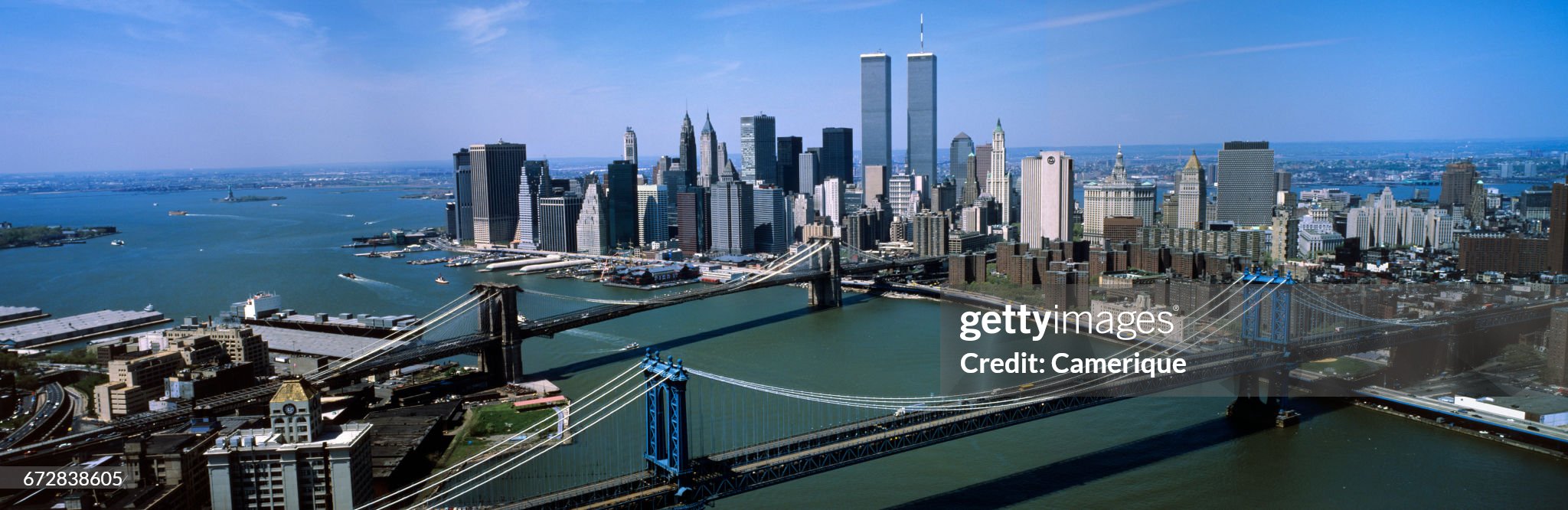
Our generation’s Pearl Harbor — the single event that made everyone American and everyone vulnerable in the same instant.
The knowledge existed. No one held a single collective view.
Twenty-five years ago I was supposed to be on the 25th floor of the North Tower at 10:00 a.m. on September 11. I slept through my alarm and lived. What I’ve spent my career learning since is that the failure that morning was not a failure of information. It was a failure to assemble it — to move what was known to where a decision could be made. That is a risk problem, and it has not gone away.
I. The Morning Everything Changed
The week before
I had just been laid off. On Thursday, September 6, 2001, Netscape let me go from its Midtown Manhattan office. The tech economy was soft, but there was still real work implementing solutions, and I was deep in a set of projects tied to a longstanding partnership with Sun Microsystems. That Friday I chased contacts and open deals. On Monday, September 10, I came into the city, met contacts at Sun, and set a meeting for 10:00 the next morning — the 25th floor of the North Tower of the World Trade Center.

I still have the visitor ID they issued me. It is dated 9/10/01 and was good for the week. The lobby was so thick with tourists that without a badge you could lose thirty minutes just getting through. I keep that badge. It still unsettles me to hold it.
8:45 a.m.
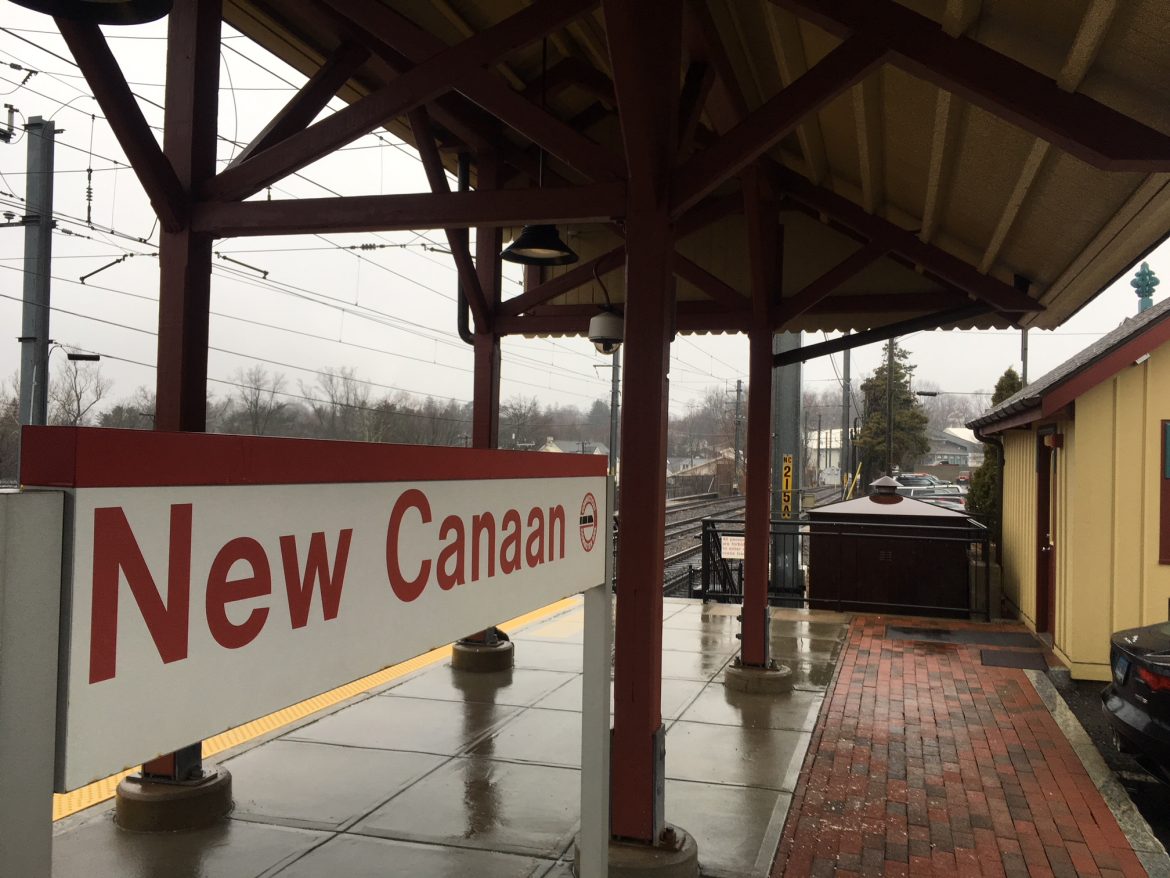
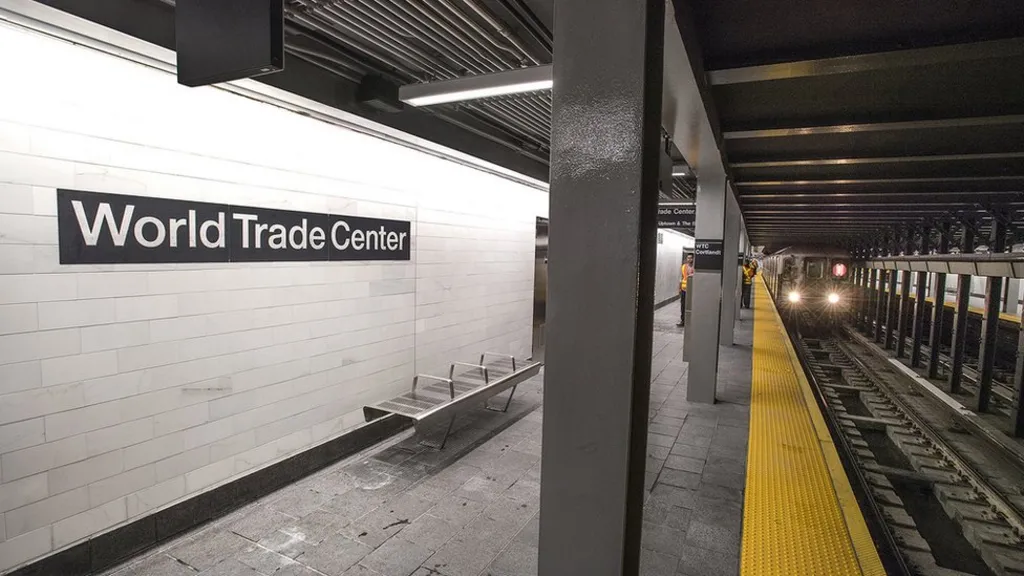
I slept through my alarm. I normally woke at 6:15 and caught a 7:15 train from Southern Connecticut, an hour out. With the subway transfer I’d have reached the WTC concourse around 8:45 — time to meet friends, grab a coffee, and head up. Instead I woke at 8:45 to a missed alarm and turned on Good Morning America. The broadcast cut away almost immediately: the building I was supposed to be inside, smoke pouring out of it. The first read, on air and in my kitchen, was a small plane gone astray.
My wife’s friend called to alert us and woke us up, telling us about the first plane. We turned on the eyewitness news as we heard screaming in the background. While we were watching the news report, my friend saw the second plane pass her window. Then, as we all watched the second plane hit and heard screaming in the background, the phone connection died. We were unable to reach any of our other friends. It was surreal.
Who made it, and who didn’t
Messaging in 2001 was nothing like today. I had a few dozen contacts on AOL Instant Messenger, and that is how I reached people in the building. Friends in the Sun offices were already leaving — and then were turned around in the lobby by police who told them everything was under control.
- A close friend was meant to ride the train in and join me at Sun. He was closing on a new house and detoured to his bank to sign contracts, finishing around 8:45 as the first plane hit. He and his pregnant wife were locked inside the bank all day. Cell service collapsed almost instantly; you could not simply call to check on someone. He was saved by a mortgage signing.
- One of the Sun managers we met on September 10 had booked his own travel back to Boston that night. Tuesday morning he was flying to Los Angeles. His flight turned toward New York and struck the tower he had stood in the day before. By the end of the day, an executive told me Sun had lost one person. It was him.
I keep a visitor badge dated 9/10/01. It is proof that my life, and my family’s, turned on an alarm I did not hear.
II. The Days That Followed
Vulnerable, all at once
We were glued to the television and to AIM all day. The Pentagon strike and the crash in Pennsylvania made it clear this was coordinated, and coordinated meant it could keep going. I was thirty-six, married two and a half years, in a house that was finally just ours, with good prospects in a hard market. In a single morning, solid footing became exposure.
Three years away
I did not go back into the city for three years. It scared me; it did not feel right. When I finally returned, the city wore its fear openly: Hercules teams of heavily armed police, chemical sniffers, dogs, constant random checks. I later joined another technology company whose staff had been assigned to the WTC recovery — working with the military to pull data from beneath the debris field. The story kept circling back to that same ground.
III. The Signals That Never Converged
A warning shot, ignored
The first attack came in 1993. On February 26, 1993, a truck bomb detonated in the WTC parking garage. Ramzi Yousef, whose uncle was Khalid Sheikh Mohammed, and the circle around Omar Abdel-Rahman told us plainly they would be back. Much of that network traces to the Afghan-Arab jihadist milieu of the 1980s Soviet-Afghan war — a milieu that U.S. support for the Afghan resistance, channeled largely through Pakistan’s ISI, helped incubate. The 1993 bombing was a physical-security problem with physical-security answers: bollards, tiered access, inspections, cameras, checkpoints. Most were slow to come.
Available, but siloed Not combined
By the summer of 2001, the pieces existed in separate hands. No single desk was assembling them into one urgent picture.
- August 6, 2001 — the President’s Daily Brief titled “Bin Ladin Determined To Strike in US.” A strategic-intent signal at the highest level.
- July 2001 — the Phoenix memo. An FBI agent flagged extremists training at U.S. flight schools and urged a systematic look. It went nowhere in time.
- August 2001 — Zacarias Moussaoui was arrested in Minnesota; field agents pressed for a warrant to search his laptop and could not clear the legal bar in time.
- Two future hijackers, Khalid al-Mihdhar and Nawaf al-Hazmi, were known to the CIA to be tied to al-Qaeda and inside the United States. The information did not cross to the FBI or onto a watchlist until it was far too late — the infamous “wall.”
Figure 1 — The web no one drew
Every line is a connection that existed in the data. No single person or agency drew them in time. The intelligence to be alarmed was real; the assembled picture was not.
The hijackers were not watch-listed and not tracked. Today, cockpit access is effectively impossible: box cutters are blocked, doors are hardened, protocols rewritten. In 2001, none of that existed — and more importantly, the intelligence that might have prompted it never reached the people who could have acted.
IV. When Risk Is Fragmented
Five ways a risk goes unmanaged
Fragmentation is not one failure; it is a chain of them. Separating them is what turns hindsight into a usable model. September 11 was not primarily a failure to identify a threat — the intent was documented. It broke further down the chain.
- Identify — largely succeeded; intent was on the record.
- Assess — likelihood and impact were never aggregated into one enterprise-level judgment.
- Communicate — signals stayed inside agency boundaries; the “wall” was structural.
- Own — no accountable decision-maker held the combined picture.
- Control — proportionate preventive controls (watchlisting, flight-school scrutiny, cockpit hardening) came only after.
The reforms — and whether they held
The response was structural, and its logic was sound. Each reform was a direct answer to a named failure: consolidate screening, consolidate accountability, consolidate signals.
- Transportation Security Administration (Nov 2001) — the Aviation and Transportation Security Act federalized airport screening and hardened cockpit doors.
- Department of Homeland Security (Nov 2002) — the Homeland Security Act consolidated 22 agencies under a single accountable department.
- The 9/11 Commission (2004) — a public, authoritative account of the failures and a blueprint for reform.
- Director of National Intelligence & the fusion model (2004–05) — the Intelligence Reform Act created a DNI and the fusion-center network meant to tear down the “wall” between agencies.
- Terrorist watchlisting — a consolidated screening database so a name known to one agency is known to all.
Then reality tested them. Richard Reid tried to light a shoe bomb that December. In 2009 Umar Farouk Abdulmutallab boarded a Detroit-bound flight with a device — after his own father had warned a U.S. embassy. In 2013 the Tsarnaev brothers bombed the Boston Marathon after Russian intelligence had specifically warned the FBI about the elder brother. The dots were sometimes reconnected in time and sometimes not. “Connect the dots” was never fully solved; in large part it was relocated to new seams. That is the honest lesson: reorganization narrows the gaps, it does not close them.
Figure 2 — Small movements, huge effects: 1993 to today
A truck bomb in the garage. Yousef and his circle promise they will return.
The CIA follows al-Mihdhar and al-Hazmi from Kuala Lumpur; the thread is not shared.
An FBI agent flags extremists in U.S. flight schools. It stalls.
The intent reaches the highest desk in the country in writing.
Field agents cannot clear the bar to search his laptop in time.
2,977 lives lost. The scattered signals become one picture — too late.
Screening federalized; cockpit doors hardened.
Richard Reid tests the new controls within months.
Twenty-two agencies consolidated under one department.
The wall between agencies is targeted for demolition.
A father’s warning fails to route. The seam moves.
Russia had warned the FBI about the elder brother. The dot goes unconnected again.
A working generation now knows this only as history — and the lesson still waits to be applied.
Read it as a chain, not a set of isolated dates. The largest effects grew from the smallest movements — a memo not routed, a name not shared, a warrant not granted.
V. What Organizations Should Learn
Why an audited framework matters
A simple, audited framework liberates information. I map this story to ISO 27001 because certification forces the behaviors that were missing in 2001. Clause 4 (context) and Clause 6 (risk assessment) demand a single, maintained risk picture rather than scattered fragments. Clause 5 (leadership) assigns accountable ownership. Clause 7 (support and awareness) obligates you to move information to where it is needed. Clauses 9 and 10 (evaluation and improvement) force you to test and revise controls after every near miss — the shoe bomber, the warning that didn’t route. Annex A physical controls are the 1993 lesson written down. The point of an audit is not the certificate; it is that strategic and operational goals are finally forced into alignment through evidence someone has to produce.
The modern parallel: supply chain
Supply-chain compromise is today’s fragmented risk. A trusted component, quietly weaponized, reaching everywhere at once — SolarWinds is the cyber version, the semiconductor shortages the industrial one, and COVID the human one. Every serious incident-response plan has always included pandemic planning. Almost no one funds it or takes it seriously until it arrives. The weak signals are present; the enterprise-level view is not.
And clients still want the shortcut. I regularly meet organizations shopping for risk maturity, awareness, and accountability delivered fast, cheap, and with minimal effort — vendors happy to sell exactly that veneer. That is precisely how weak signals go uncombined. Risk work that can be bought without being done is not risk management; it is documentation of the gap.
Five lessons for executives
Good risk management cannot promise prevention. It improves detection, decision quality, preparedness, and recovery. That is the honest offer — and it is worth everything.
- Consolidate the signals. Drive micro-level data to a macro-level view. No one should have to be in the room to connect two facts.
- Assign ownership. Every material risk needs a named, accountable decision-maker — not a committee.
- Challenge assumptions. “Under control” is a hypothesis, not a status. Treat comforting narratives as risks.
- Test the crisis plan. An untested continuity or incident plan is a document, not a capability. Exercise it, including the scenarios no one funds.
- Document risk acceptance. When you choose not to act on a signal, write down who decided and why. Accountability is what survives the hindsight.
VI. Remembering Without Simplifying
What the badge reminds me
I owe my life to a missed alarm, not to good judgment. The manager I met on September 10 owed his death to a routine flight home. My friend owed his survival to a mortgage. It is tempting to make luck into a lesson, and I refuse to. The lesson is elsewhere: the intelligence to be alarmed largely existed, and it was never assembled into one urgent picture owned by someone who could act. We honor the people lost that morning not by pretending prevention was guaranteed, but by building organizations disciplined enough to combine what they know before the next morning arrives — and by doing the hard work that no shortcut can buy.
VII. Twenty-Five Years On
September 11 is our generation’s Pearl Harbor. It was the single coalescing event that made everyone American and everyone vulnerable in the same instant — the moment a whole country stopped and understood, together, that distance and prosperity were not protection. There is a working generation now who never lived through that morning, who know it only as history, the way I knew Pearl Harbor from my parents. This anniversary is for them as much as for us.
We lost our innocence that day, and we matured in the years after. The maturity worth keeping is not fear — it is the habit of seeing the big picture: the interconnections, the small movements over time that produce enormous effects. A memo not routed. A name not shared. A warrant not granted. Read alone, each was minor. Assembled, they were everything.
My hope, twenty-five years on, is that we never forget — and that we convert the vulnerability and fear of that morning into the discipline of managing risk. Remember the people. Then go connect the dots that are sitting, right now, in separate hands.
Twenty-five years on, the Survivor Tree offers another way to remember. Found badly damaged in the rubble, with broken roots and burned and broken branches, it was removed, rehabilitated, and eventually returned to the 9/11 Memorial. Today, new limbs grow from the old wounds. It stands as a living reminder that resilience does not erase what was lost. It grows from it.
References & Sources
- National September 11 Memorial & Museum, “The Survivor Tree.” 911memorial.org/visit/memorial/survivor-tree
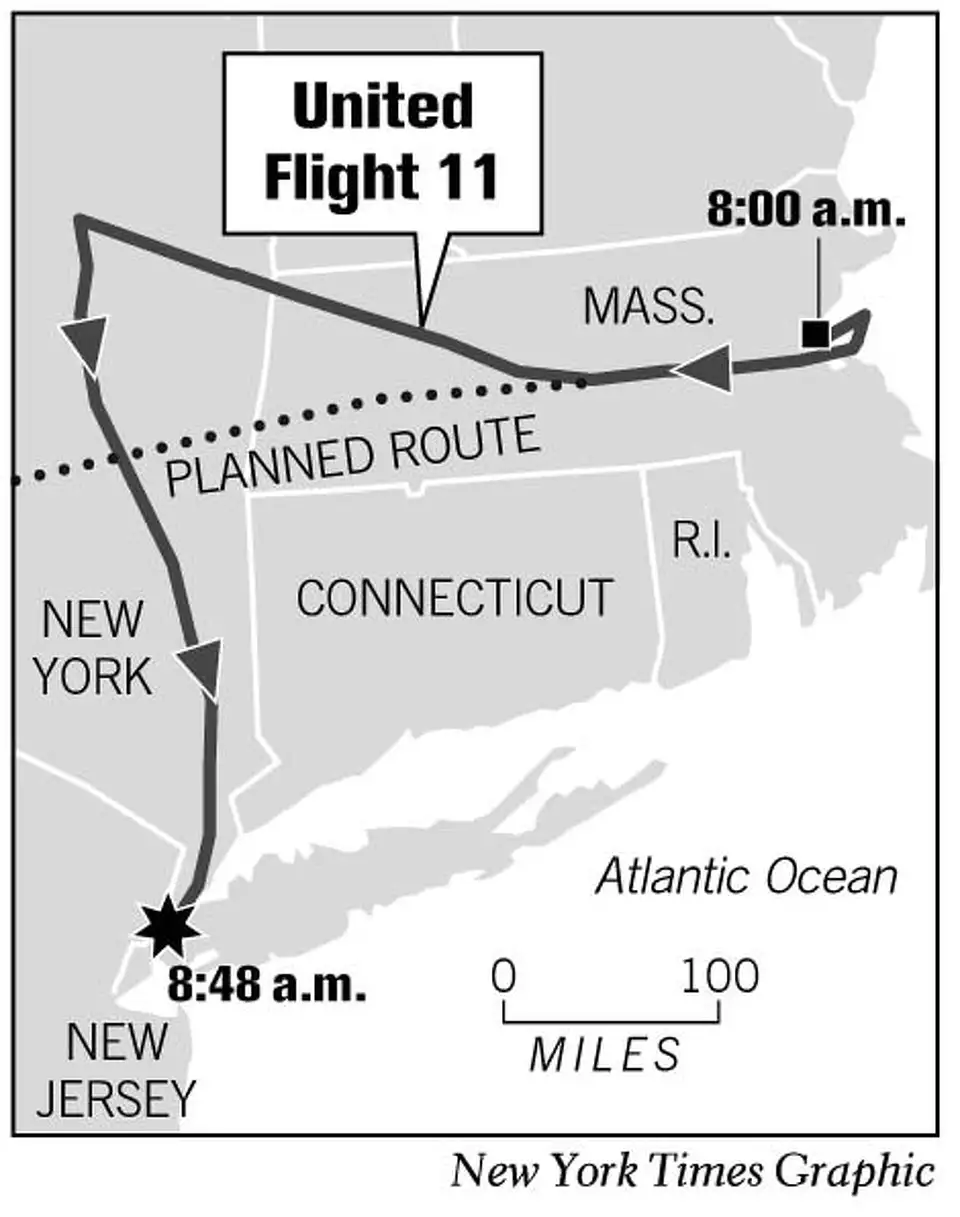
- National Commission on Terrorist Attacks Upon the United States, The 9/11 Commission Report (2004). Flight-path graphic by The New York Times, via Hearst Newspapers.
- iPlanet home page as it appeared on September 7, 2001 (Internet Archive). web.archive.org
- “iPlanet (1999–2002),” rip.so. rip.so/iplanet.html
- David McNew / Getty Images, “Silicon Valley scenics” — Sun Microsystems “Now Hiring” sign (#748123).
- NewCanaanite.com, New Canaan station photograph (2018).
- BBC News, WTC Cortlandt station photograph (2018).