
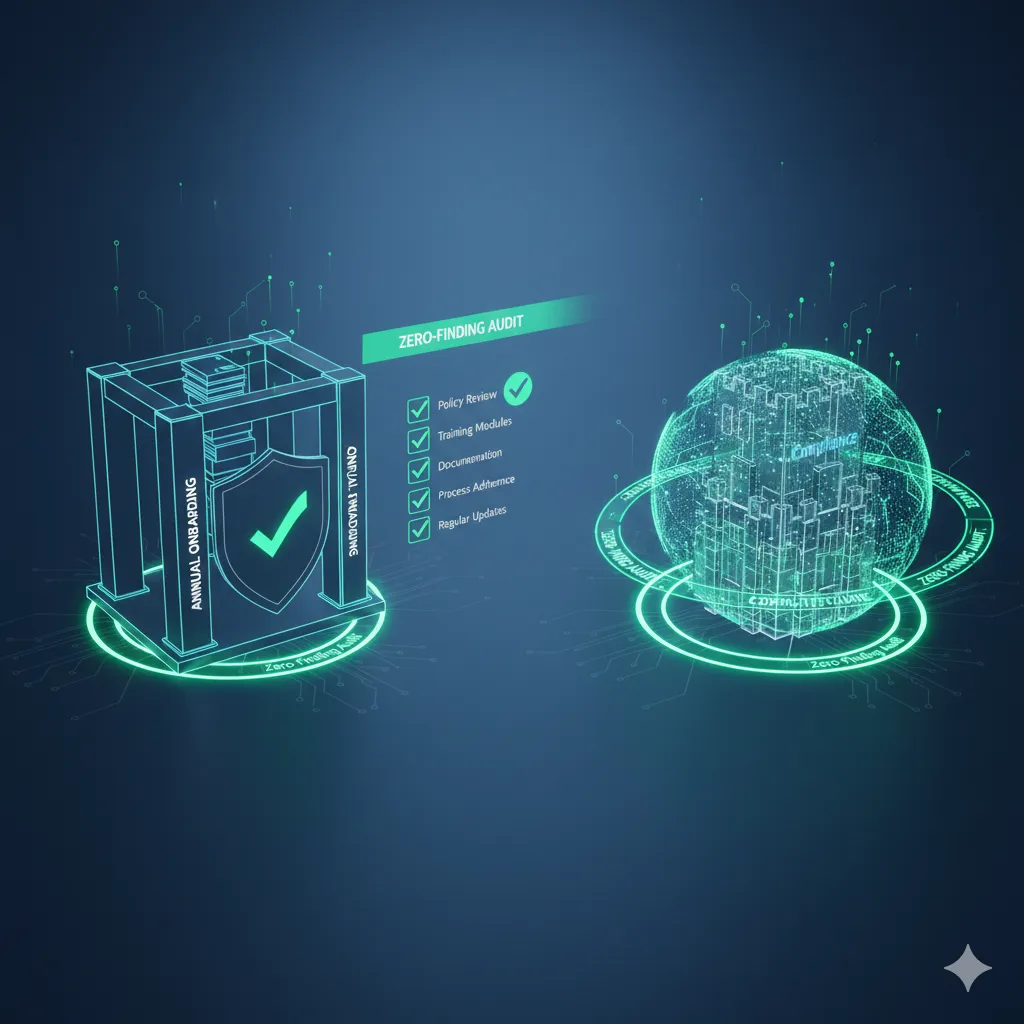
In the high-stakes world of information security, the word "onboarding" is often treated as a bureaucratic formality—a flurry of paperwork followed by a long silence. But at Airius, we view onboarding differently. It is not a single event; it is a foundational, annual realignment of your business objectives with the cold reality of the modern threat landscape.
Since 1999, Airius has served both nimble startups and global enterprises. We have seen the evolution of risk from simple server room locks to complex, cloud-native zero-trust architectures. Through hundreds of successful audits, we have learned one universal truth: Risk management is not a project; it is a rhythm.
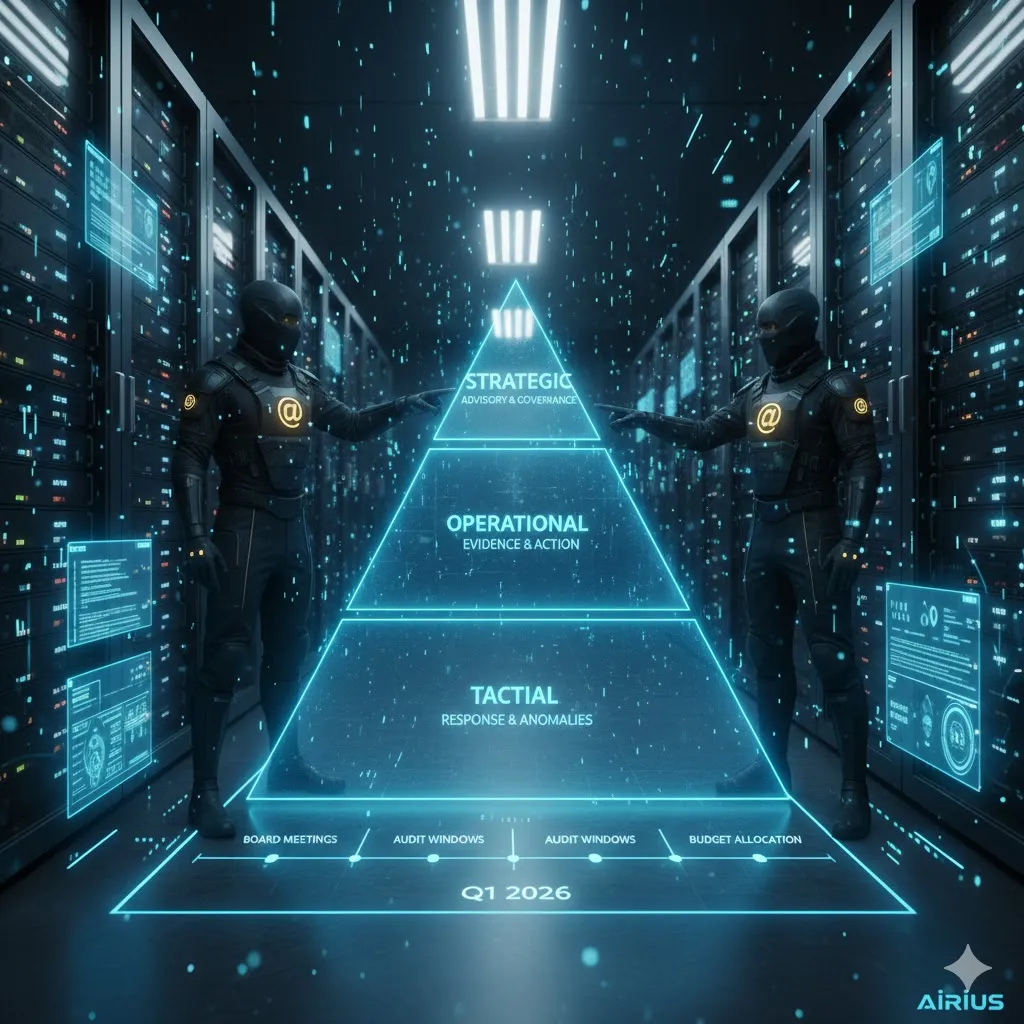
By treating onboarding as a yearly cycle, we help our clients budget effort, reserve resources, and establish a clear hierarchy of action. Our "Risk Management as a Service" (RMaaS) model categorizes security into three distinct layers: Strategic, Operational, and Tactical. When these three work in harmony, the impossible becomes possible: completing a major audit with zero findings.

1. The Philosophy of the Annual Reset
Most organizations approach an audit with a sense of dread. There is a frantic rush for screenshots three weeks before the auditor arrives, followed by a series of "emergency" policy updates that the executive team hasn't actually read. At Airius, we eliminate this chaos by onboarding existing clients yearly.
Why Annual Onboarding?
Risk management is inherently complex. It requires clients to follow very specific rules, regulations, and processes to maintain compliance. These aren't static; they evolve as your business grows and as threat actors become more sophisticated.
- Budgeting Work Effort: Security compliance requires human capital. By onboarding annually, we help you map out exactly how many hours your IT, HR, and Legal teams will need to dedicate to compliance tasks. This prevents "compliance fatigue" and ensures that security doesn't become a bottleneck for your primary business goals.
- Event Planning and Scheduling: The modern compliance calendar is crowded. Between quarterly board meetings and annual SOC 2 or ISO 27001 audits, the timing must be precise. During the annual onboarding phase, we look 12 months ahead. We schedule your audit windows and board presentations well in advance, ensuring that "compliance" never surprises the "business."
- Resource Reservation: Strategic, operational, and tactical resources are finite. By planning a year in advance, we ensure that the right experts—both from your team and ours—are "locked in" during your peak periods, preventing resource contention when the stakes are highest.
2. The Three-Tiered Framework of Risk
To manage the complexity of modern regulations, we divide our work into three distinct spheres. This clarity allows your team to understand exactly what is required of them at any given moment.
Pillar I: The Strategic (Advisory and Governance)
Strategic risk management is the "Architect" level. It focuses on the long-term, advisory activities required to manage information security over time and satisfy specific obligations for audit each year. It is the "Why" and the "How" of your security posture.
Pillar II: The Operational (The Engine of Evidence)
If Strategy is the "What," Operations are the "How." This is where information risk is managed through the relentless collection and replacement of evidence. Evidence requests—logs, processes, procedures, and screenshots—are the lifeblood of this pillar. They interact with information risk and "do" those things that are required to maintain a secure posture.
Pillar III: The Tactical (The First Responders)
Tactical risk management focuses on emergency and anomalous event response. This is the "now" layer. Whether it is a server outage, a suspected breach, or a strange login notification, these events require immediate, decisive action.
In all of these cases, the information security team merely observes, keeps score, and provides guidance and feedback.

3. The "Observer" Paradox: Why We Keep Score, But Don’t Play the Game
One of the most significant misunderstandings in the industry is the role of the Information Security (InfoSec) team. Many clients initially expect their security partners to "execute" the technical changes—to be the ones clicking "save" on the firewall or "delete" on a user account. However, Airius maintains a strict boundary for a vital reason: Audit Integrity and Risk Clarity.
The Referee vs. The Player
Imagine a professional football game where the referee is also the quarterback for one of the teams. No matter how fair the referee tries to be, the integrity of the game is compromised. In the world of compliance, Airius is the referee.
- Observation: We monitor the landscape, ensuring that the operational teams are adhering to the 60 policies established during the Strategic phase.
- Scorekeeping: We maintain the ledger of compliance. If a monthly log review is missed, we document the gap. This "scorecard" is what provides the transparency needed for a successful audit.
- Guidance and Feedback: When a gap is identified, we don't just point and blame. We provide the advisory feedback required to remediate the issue.
Maintaining Objectivity in Tactical Response
Even in tactical emergencies, our role as the observer is critical. If an anomalous event occurs—such as a potential data exfiltration—the client’s technical team executes the tactical response while Airius observes the process. We ensure that the response follows the pre-approved procedures and that the "evidence" of the response is captured for future audits. This separation of duties is precisely why we can walk into an audit with confidence; we have been independently verifying the work all year long.
4. Deep Dive: The 60-Policy Governance Model
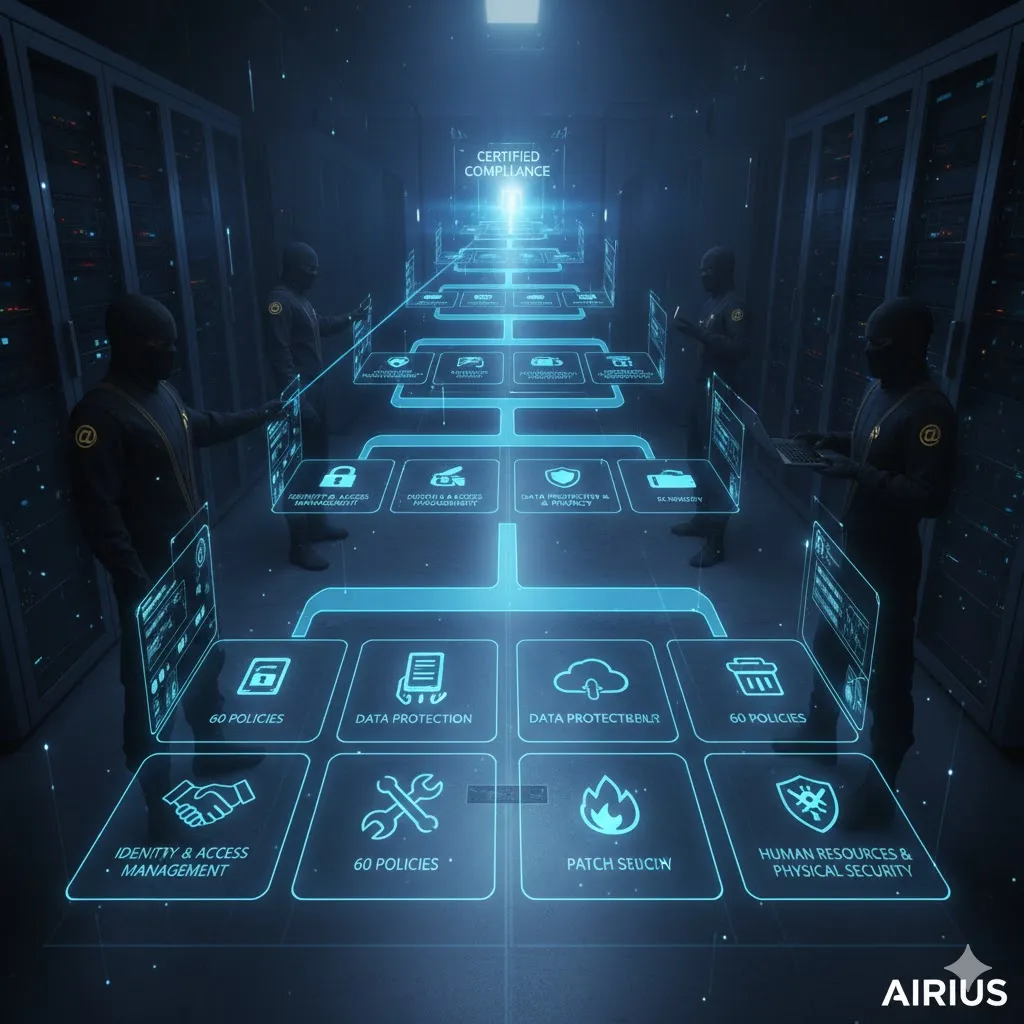
At the heart of the Airius Strategic Pillar lies our proprietary 60-policy framework. These policies are the foundation upon which every "Zero-Finding" audit is built. During the annual onboarding, we categorize these policies into functional clusters.
Group A: Identity and Access Management (IAM)
This group addresses the most common vector for security breaches: unauthorized access.
- Policies included: Password Complexity, Multi-Factor Authentication (MFA), Administrative Access, and Remote Access.
- The Goal: To ensure the "Principle of Least Privilege" is enforced across every system.
Group B: Data Protection and Privacy
With the rise of GDPR, CCPA, and other regional mandates, how an organization handles data is a major legal risk.
- Policies included: Data Classification, Encryption at Rest, Encryption in Transit, and Data Retention/Disposal.
- The Goal: To ensure that sensitive data is identifiable, protected, and destroyed when no longer needed.
Group C: Operational Security
This cluster governs the "day-to-day" life of the IT environment.
- Policies included: Vulnerability Management, Patching Cadence, Backup and Recovery, and Change Management.
- The Goal: To minimize the attack surface and ensure business continuity.
Group D: Human Resources and Physical Security
Security is a human problem as much as a technical one.
- Policies included: Background Checks, Acceptable Use, Security Awareness Training, and Clean Desk Policies.
- The Goal: To foster a culture of security awareness from the moment an employee is hired to the moment they are offboarded.
5. The Operational Engine: Replacing Evidence Like Clockwork
In the Operational Pillar, the "doing" of security occurs. This is often where organizations fail because they treat evidence collection as an annual "scavenger hunt" rather than a scheduled business process. At Airius, we automate and manualize the cadence of evidence replacement to ensure that the audit trail is never cold.
The Lifecycle of Evidence Requests
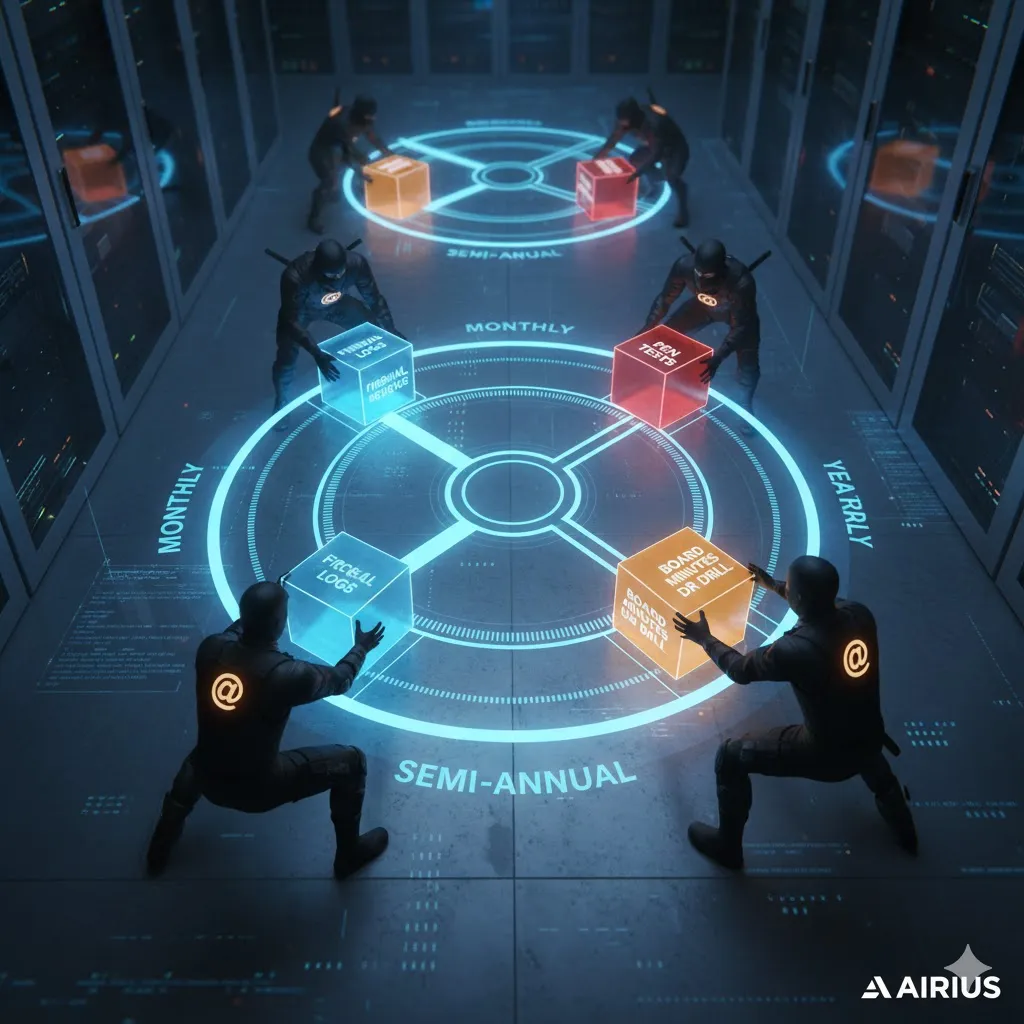
Evidence isn't just a screenshot; it is a proof-of-work artifact. We categorize evidence into four distinct lifecycles:
- Monthly Evidence: This includes high-velocity items like firewall change logs, user access reviews for privileged accounts, and vulnerability scan results. By reviewing these monthly, we catch "configuration drift" before it can be exploited.
- Quarterly Evidence: This typically involves board meeting minutes, disaster recovery tabletop exercises, and physical security inspections. These provide a higher-level view of organizational health.
- Semi-Annual Evidence: These are deep-dive reviews, such as penetration test remediations and comprehensive risk assessments.
- Yearly Evidence: This is the "big picture" evidence, including the full review of all 60 policies, insurance renewals, and third-party vendor risk assessments.
By distributing these tasks across the year during the annual onboarding phase, we ensure that the workload is predictable. Your team knows that the first Tuesday of every month is "Log Day," and the third Thursday of every quarter is "Review Day." This predictability is what allows our clients to budget their work effort accurately.
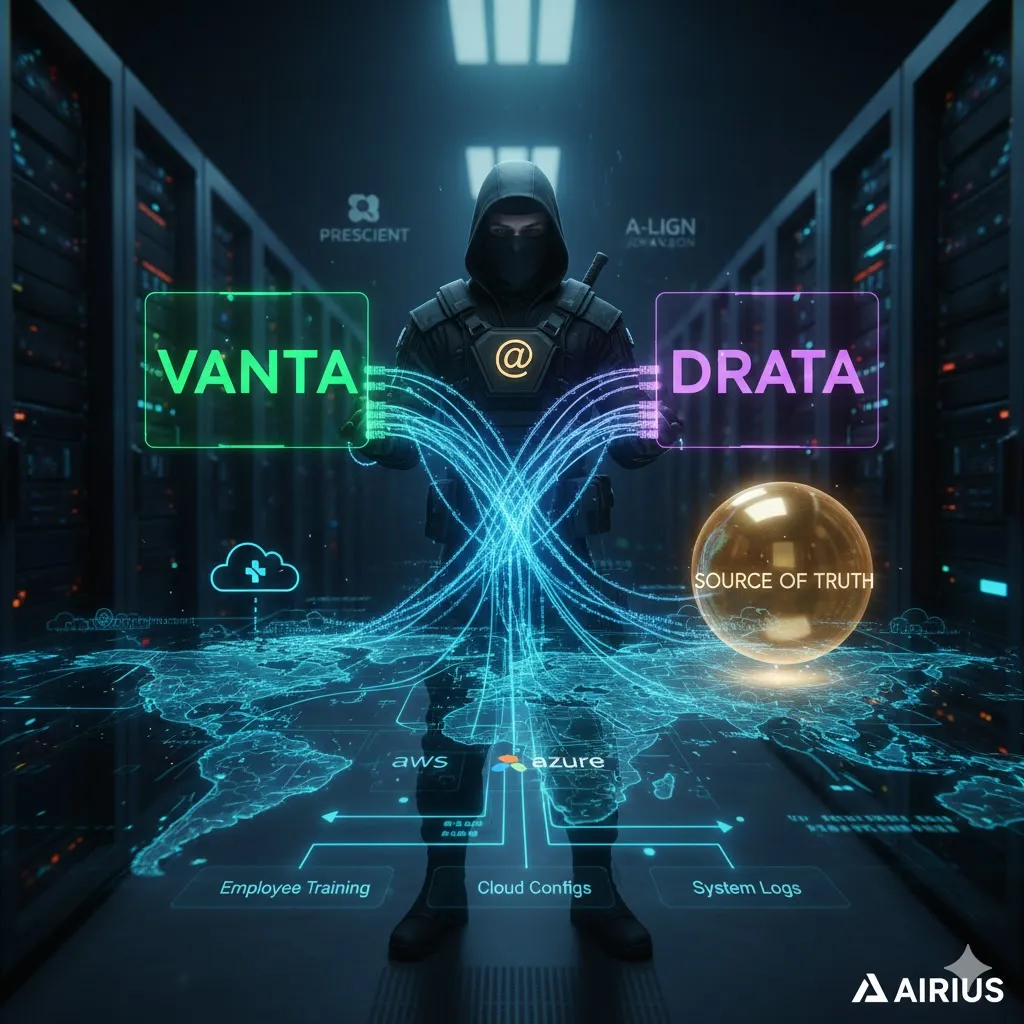
6. The GRC Ecosystem: Leveraging Vanta and Drata
Airius delivers "Risk Management as a Service" by combining human expertise with world-class technology. We partner closely with GRC (Governance, Risk, and Compliance) industry leaders like Vanta and Drata.
How We Use GRC Tools
In our model, these platforms serve as the "Sensors" in the Operational Pillar. They connect to your cloud infrastructure (AWS, Azure, GCP), your identity providers (Okta, Google Workspace), and your task management systems (Jira, Linear).
- Continuous Monitoring: Instead of waiting for a manual check, these tools provide real-time alerts if a database is left unencrypted or if an employee hasn't signed their security training.
- The Airius Layer: While the tools provide the data, Airius provides the Strategic context. A tool can tell you a setting is "off," but Airius tells you why that matters for your specific audit and how to fix it without breaking your production environment.
- Audit Preparation: These platforms provide a "Source of Truth" for auditors. When we work with firms like Prescient, Johanson, and A-LIGN, we grant them access to these pre-verified environments. This reduces the time an auditor spends on your site from weeks to days.

7. Tactical Response: The Science of Anomalies
While Strategy and Operations are planned, the Tactical layer is reactive. However, "reactive" does not mean "unprepared."
Emergency and anomalous event response is tactical. In these cases, the InfoSec team observes and keeps score. When a server behaves strangely or an account shows multiple failed login attempts from a foreign country, our tactical playbooks—developed during the annual onboarding—spring into action.
- Observation of Response: We watch how your internal teams respond. Are they following the Incident Response Policy? Are they preserving the chain of custody for forensics?
- Guidance and Feedback: Once the immediate threat is neutralized, we provide a "Post-Mortem." We analyze the score—did the response meet the Service Level Agreements (SLAs) defined in our strategic policies? If not, we adjust the strategy for the following year.

8. Case Study: The Path to "Zero Findings"
To illustrate the power of this model, consider a recent engagement with a mid-market SaaS provider. When they arrived at Airius, they had just failed a SOC 2 audit with fourteen significant findings. Their "onboarding" at their previous firm had been a single 30-minute call.
The Airius Intervention
- Annual Onboarding Reset: we spent two weeks in a deep-dive onboarding, reserving tactical and operational resources for the entire year. We mapped out every board meeting and audit date.
- Implementation of the 60: We replaced their generic templates with our 60-policy framework, gaining immediate executive support through a dedicated board presentation.
- The Observer Model: We implemented a monthly evidence refresh cycle. For six months, Airius "kept score." We identified three major gaps in their offboarding process and provided the guidance to fix them before the official audit window opened.
- The Result: When A-LIGN performed the audit, the evidence was so organized and the strategic narrative was so clear that the auditor completed the review in record time. The report came back with zero findings.

9. Legacy and Longevity: The Airius Standard Since 1999
Information security is an industry of "flavors of the week." New firms pop up every time a new regulation is passed, only to disappear when the complexity becomes too much. Airius has been in business since 1999. We have navigated the transition from physical data centers to the cloud, and from basic firewalls to AI-driven threat detection.
Our longevity is a testament to our philosophy: Risk management is about people and processes, not just tools. We have completed hundreds of successful audits because we prioritize the relationship. We don't just give you a login to a portal; we provide a partnership that spans the strategic, operational, and tactical layers of your business.
10. Conclusion: Your Compliance Journey Starts with Planning
Risk management is complex. It is a shifting landscape of rules, regulations, and threats. But it is a challenge that can be mastered. With the Airius "Risk Management as a Service" model, you aren't just surviving an audit; you are building a resilient organization.
By onboarding existing clients yearly, we ensure that:
- Work effort is budgeted and transparent.
- Resources are reserved and ready.
- Expectations are set at the board level.
- The "Zero-Finding" audit becomes a repeatable reality.
Whether you are looking to achieve your first SOC 2, maintain an ISO 27001 certification, or simply secure your enterprise against the unknown, the path forward is clear. It requires a strategic architect, an operational engine, and an objective observer.
With planning, careful forethought, and the 25+ years of experience behind Airius, you can turn compliance from a burden into your greatest competitive advantage.
Visit us at Airius.com to schedule your annual onboarding and take the first step toward a zero-finding future.

General Attribution & Licensing Statement for all images
- Credit: Image generated by Google’s Nano Banana (Gemini 3 Flash/Pro Image technology).
- Licensing: Licensed under Creative Commons Attribution-ShareAlike 4.0 International (CC BY-SA 4.0).
- Usage Terms: This content is AI-generated; users may redistribute or adapt the material for any purpose, provided appropriate credit is given and any modifications are indicated.